
When sourcing baby corn for your business, a critical decision lies in choosing between canned and frozen formats. As a leading canned baby...
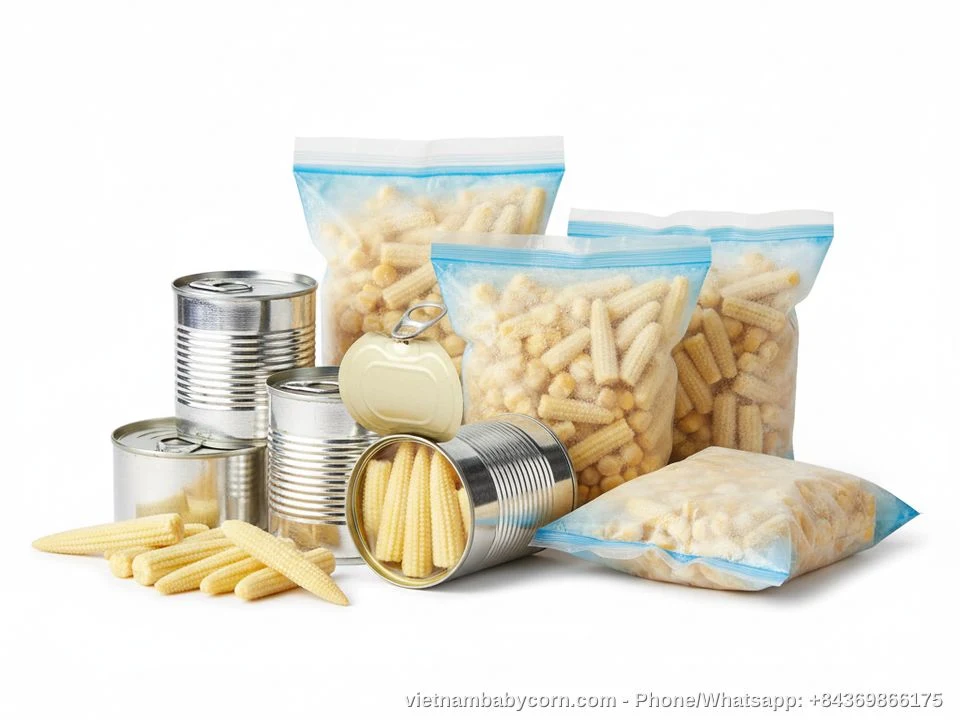
When sourcing baby corn for your business, a critical decision lies in choosing between canned and frozen formats. As a leading canned baby corn manufacturer and exporter from Vietnam's fertile Mekong Delta, Mekong Herbals understands that this choice impacts everything from storage and shipping costs to the final application in your products. This comparison aims to equip you, our valued B2B buyer, with the insights needed to make the most strategic decision for your operational needs.
Canned vs Frozen Baby Corn: A Strategic Overview
Both canned and frozen baby corn offer distinct advantages for businesses in the food industry. Understanding these differences is key to optimizing your supply chain and product development. At Mekong Herbals, we are proud to offer both options, backed by our stringent HACCP and ISO 22000 certifications, ensuring quality and safety regardless of your chosen format.
Shelf Life and Storage: The Logistics Advantage
One of the most significant differentiating factors is shelf life and storage requirements. This directly influences inventory management and logistical costs.
- Canned Baby Corn: Offers an impressive shelf life of up to 36 months. This extended longevity is a major advantage for businesses requiring long-term storage or dealing with fluctuating demand. Canned baby corn can be stored at ambient temperatures, eliminating the need for expensive refrigerated warehousing and transportation. This makes it a more cost-effective option for shipping globally, especially over long distances.
- Frozen Baby Corn: Typically has a shelf life of up to 24 months when stored correctly. The primary requirement for frozen baby corn is consistent storage at -18°C or below. This necessitates investment in freezer storage facilities and refrigerated transport, which can incur higher operational costs.
Texture and Nutritional Profile: Impacting Your End Product
While both formats are derived from the same high-quality baby corn sourced from Vietnam's Mekong Delta, processing methods result in subtle differences in texture and nutrient retention.
- Texture: Canned baby corn undergoes a thermal processing step, which can result in a slightly softer texture compared to its frozen counterpart. This makes it ideal for applications where a tender bite is desired and minimal cooking is involved. Frozen baby corn, particularly IQF (Individually Quick Frozen) baby corn, retains a firmer texture, making it excellent for stir-fries, casseroles, and other dishes where it will be cooked extensively and needs to hold its shape.
- Nutritional Value: Both methods preserve a significant portion of the original nutrients. However, freezing is often considered to lock in nutrients more effectively due to the rapid freezing process, which minimizes cellular damage. While canning involves heat, modern canning techniques are designed to retain a good nutritional profile. For most culinary applications, the nutritional differences are negligible.
Cost Comparison and Best Applications for Wholesale Baby Corn
The cost implications extend beyond the initial purchase price to include shipping and storage.
- Cost: As mentioned, the ambient storage and shipping advantages of canned baby corn generally make it a more budget-friendly option for businesses prioritizing cost efficiency in their supply chain. Frozen baby corn, while potentially having a slightly higher per-unit cost due to freezing and cold chain logistics, offers superior texture for certain cooking applications.
- Best Applications:
- Canned Baby Corn: Excels in ready-to-eat meals, salads, garnishes, and any application where minimal cooking or immediate use is required. Its convenient format makes it a staple for many convenience food manufacturers and foodservice providers.
- Frozen Baby Corn: Is the preferred choice for culinary professionals and manufacturers involved in cooking. Its firmer texture is ideal for stir-fries, curries, pizzas, and any dish where the baby corn will be cooked. It offers greater flexibility for chefs to control the cooking process and achieve desired textures.
Packaging and Mekong Herbals' Capabilities
At Mekong Herbals, we understand that packaging is crucial for product integrity and market presentation. We offer a range of packaging options for both canned and frozen baby corn to meet diverse B2B needs. Our capabilities include various can sizes and retort pouch options for canned products, and different bag sizes and bulk packaging for our IQF frozen baby corn. Our commitment to quality assurance, underpinned by our HACCP and ISO 22000 certifications, means you can rely on us for consistent, safe, and high-quality baby corn, whether you choose the convenience of canned or the culinary versatility of frozen.
Get a Free Quote Today
Ready to source premium baby corn from Vietnam? Mekong Herbals offers competitive pricing, flexible MOQ, and reliable global shipping.
Contact us:
- 📧 Email: contact@mekongherbals.com
- 📱 Phone/WhatsApp: +84 369 866 175
- 🌐 Website: vietnambabycorn.com
Mekong Herbals Joint Stock Company — A member of Gold Group


COMMENTS